Founder Stories

What I didn't understand about the mental load until I was home to see it.
My daughter was in middle school before she learned to ride a bicycle.
It wasn't that she didn't want to. Nobody had been around to teach her. I was never home in the evenings after school, and our weekends filled up with friends, travel and rest.
My wife doesn't ride a bicycle either. So the gap sat there for years, and I never saw it as a gap.
Nobody decided she wouldn't learn
No one in our house ever said she shouldn't learn. There was no decision to point at. Learning to ride needed a parent with free evenings, and I wasn't that parent.
Then the pandemic sent everyone home. I was still working long hours, but I was working them from the house. That gave me a couple of hours in the evening, and I used them to teach her.
It took her about three days. She learned the basics, practiced, and then she was out on the road by herself.
It took me longer to ask the obvious question. Why did it take a global shutdown for my daughter to learn to ride a bike?
Then it was tennis, and Girl Scouts
My daughter learned to play tennis without my knowing she was learning. I found out when I was told she was playing in varsity matches.
By then she had done it without me. The only training she could get was at school, during PE. My wife was driving her between practices and to varsity games at other schools.
I was bummed. If I had known, I would have tried to help her practice in our community. And I shouldn't have needed my wife or my daughter to tell me.
Girl Scouts was the same story over a longer stretch. My daughter was a Girl Scout for 12 years. Behind those years were cookie sales, camps, events and a long list of activities, and my wife supported her through all of it.
She never complained, not once. I wish there had been an easy way for me to see what she was handling. I would have chipped in however I could.
When I took a break from work, in her senior year of high school, I could give her my full attention for the first time. That year was full of moments like these.
The help I was proud of
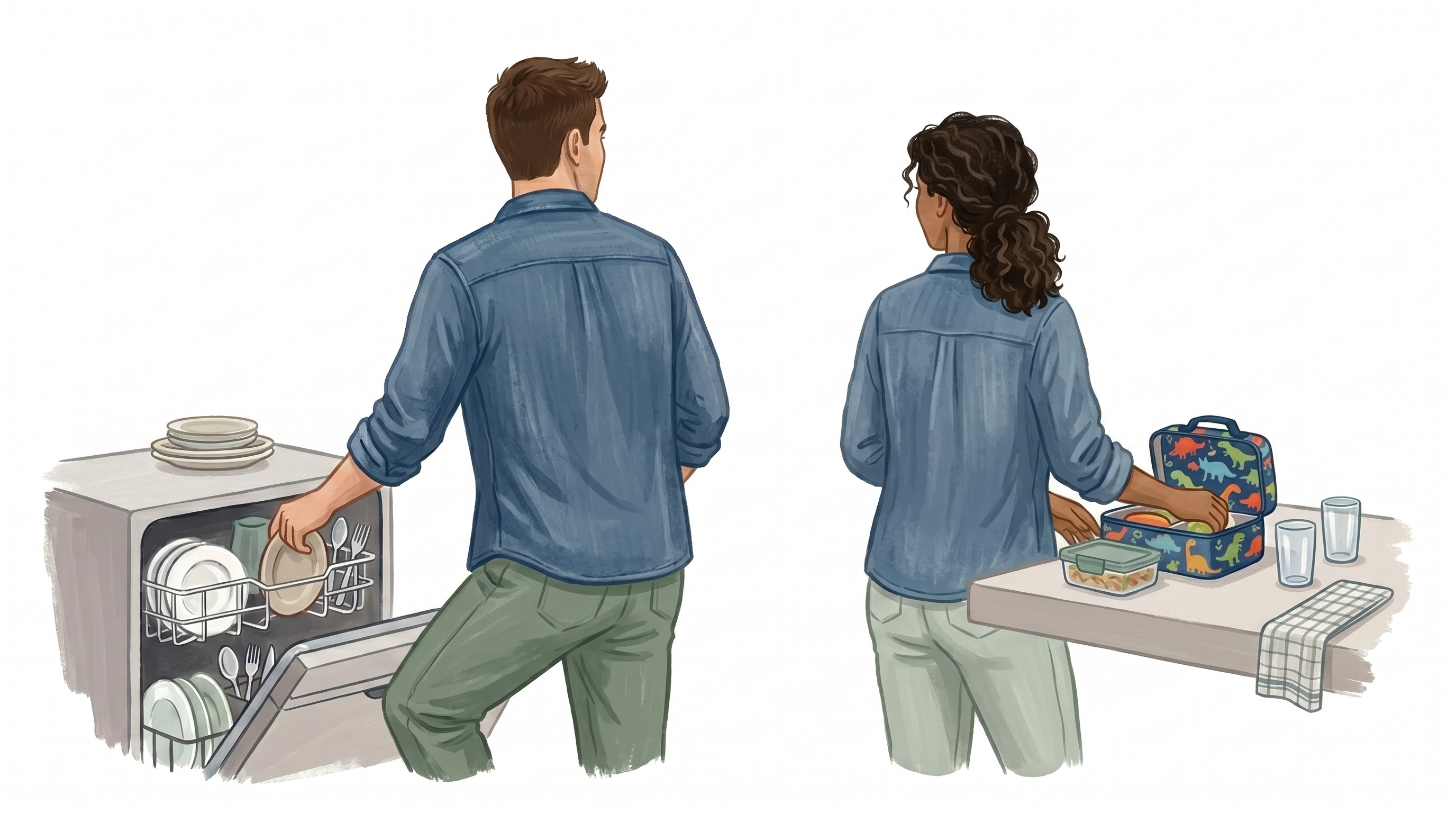
That same year I started to see how much work it takes to run our family. My wife had been doing most of it while I was away at work every day.
It also changed how I saw the things I did do. I used to feel proud of driving my daughter to school practice. But my part was getting her to the right place on time. What she needed to have ready before she got in the car was someone else's thinking.
Grocery runs were the same. I'd go to the store, then call my wife from the aisle, several times, to ask what exactly to buy. It was worst at the Indian grocery stores, where the same thing goes by different names. Besan was one. The name on the shelf wasn't the name I knew it by.
I did the driving. She did the knowing.
A single point of failure, at home
I've spent 24 years building software, much of it payments and authentication systems. In that work you learn to fear the single point of failure: the one component that knows everything, that everything else depends on, and that nobody has written down.
At home I had been depending on one without ever seeing it that way. Everything our family needed to know lived in my wife's head. I called in for instructions.
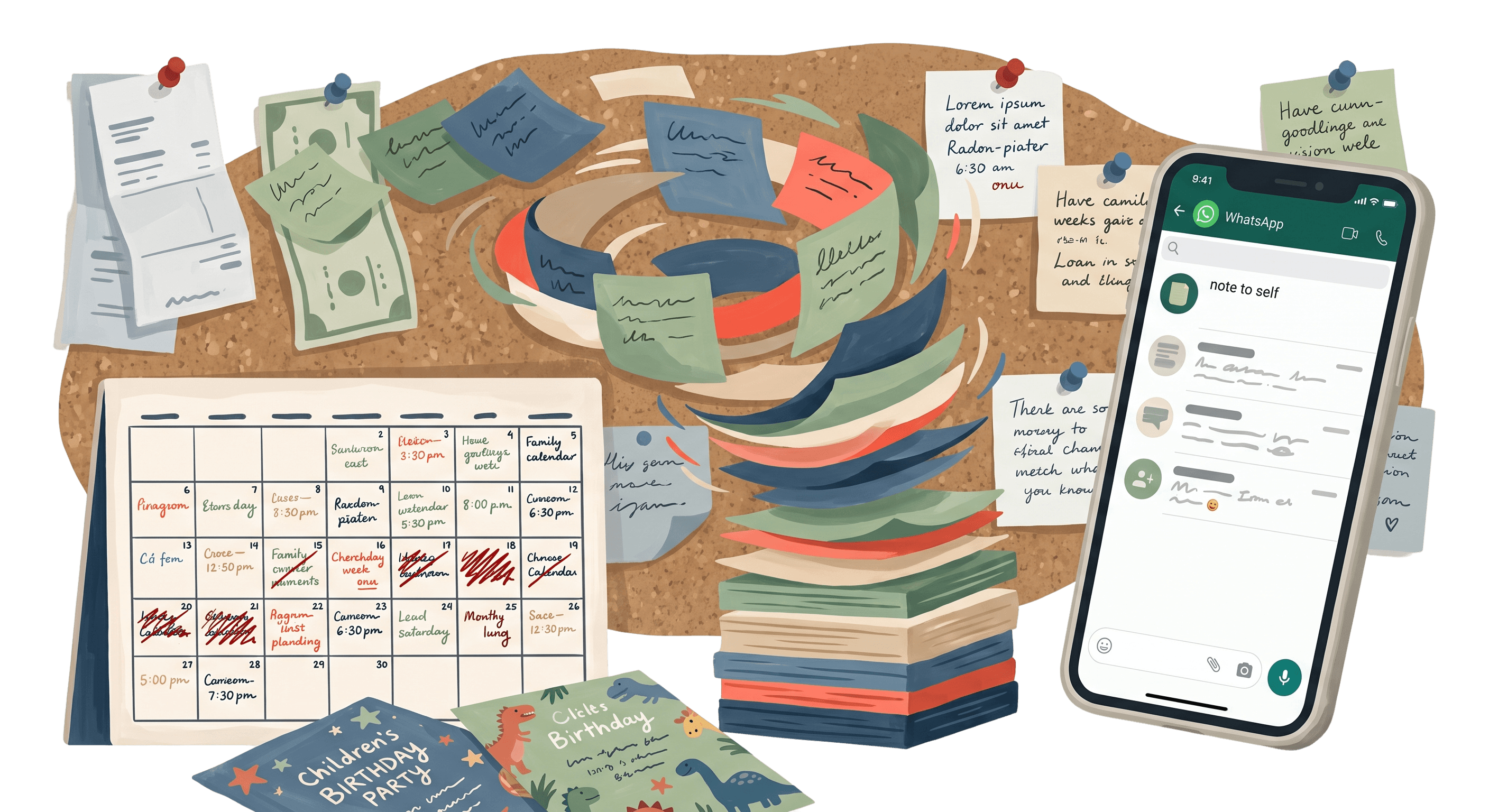
This has a name, the mental load, and it has been measured. A 2024 study from the University of Bath and the University of Melbourne found that mothers handle 71% of household mental load tasks (Catalano Weeks & Ruppanner, Journal of Marriage and Family).
I didn't need a study to recognize my own house. What it told me was that our house wasn't unusual.
Seeing the problem didn't fix it overnight. Everything still lived in her head, and I still had to ask. We needed somewhere to put it that wasn't her.
What's different now
My wife now uses Melo to get things out of her head. She tells it what we need at home, what she's planning with friends, and what has to happen for our daughter's holiday visits.
Melo breaks those down so that I can take on many of them. When I have no idea how to do something, it fills in the detail my wife used to give me over the phone. I don't have to go back to her for every small thing.
Now, when we plan our trips to visit our daughter in Boston, we use Melo to organize the itinerary together. On each trip we explore somewhere new in the city that Melo helped us find.
Some things haven't changed. My wife still spends a lot of time cooking, and that is a load I'd like to lighten. I have tried to learn several times, and I have accepted that I will never be good at it.
Melo can hand me the recipe and the shopping list. It can't do anything about what happens after I turn on the stove.
Why I'm building Melo
My co-founder Ajantha writes on this blog about carrying the mental load. I'm writing from the other side: the person who depended on it for years without seeing it.
Willingness was never my problem. The problem was that everything I needed to know to be useful lived in one person's head. Getting it out meant asking her, and every question was more work for her.
That is the part Melo is built for. It gives the knowing somewhere to live other than one person's head. It hands each of us our piece with enough detail to do it without a call from the grocery aisle.
If you're the one making those calls, count them for a week. That number is a fair first measure of the load you aren't carrying.